Thursday, May 09, 2013

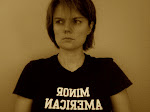
MINOR AMERICAN AND YESYES BOOKS PRESENTS:

A BOOK PARTY FOR

TANYA OLSON'
S
BOYISHLY

WEDNESDAY, MAY 15, 2013

DOORS OPEN: 7pm
PERFORMANCES START: 7:30p


@ The Pinhook

117 W Main St, Durham, NC
Poetry, Film & Performances by:
TANYA OLSON
DASAN AHANU and the
BULL CITY SLAM TEAM
SHIRLETTE AMMONS
JIM HAVERKAMP
CHRIS VITIELLO


MC: Magdalena Zurawski
House Band: The F*ck Yeahs

COME CELEBRATE DURHAM POETS AND ARTISTS AND SIX YEARS OF MINOR AMERICAN!

(THIS IS THE FINAL DURHAM MINOR AMERICAN READING!)

Friday, June 29, 2012

Kristen Stone
&
Feng Sun Chen
Read Poetry @ OUTSIDERS ART & COLLECTIBLES
718 Iredell Street Durham, NC 27705
7pm, Friday, July 6th, 2012
Free & BYOB


Kristen Stone has an MFA in poetry from Goddard College. Her work has appeared in in Glitter Tongue, Women's Studies Quarterly, 3:AM, and elsewhere. She is a poetry editor for Limn Literary & Arts Journal and runs Unthinkable Creatures, a chapbook press, out of her home. Kristen lives in Gainesville, Florida where she works as a youth advocate. Domestication Handbook is her first book.

Feng Sun Chen's first book is Butcher's Tree, published by Black Ocean. She is also the author of the chapbooks Ugly Fish (radioactive moat), and blud (spork press). Recent poems appear on her blog, in Conduit, Kill Author, Claudius App, Radioactive Moat and other places. She sometimes blogs about potatoes and art at Montevidayo.com.

Friday, April 27, 2012

Buy the Bruise for $12.50 -- Shipping Incl.


I have rescued a bunch of my novels from the publisher and am selling at cost + shipping. Help me get them out of the house. If you see me in person, they are only $10.


Quantity


Thursday, March 29, 2012

Accidentally Victor

I accidentally removed Victor's comment to this post because I was trying to remove my own comment that had spelling errors. But he said that he didn't actually write the article on the Mummers. Cool. I'm sorry I said that he did. And that he wasn't the one who got Conrad kicked out of the Philadelphia Magazine offices. Fine. I am wrong.

But you bait all of this, Victor. And I still think it's weird that you would come at me on a discussion board. And I don't think my analysis of what you actually wrote is wrong. The OED is right. And I had no intention of ever carrying my annoyance about your blog post out in public space. You wanted to correct me in what I think is a non-public, anonymous forum. Dude, it's just weird. You wrote an article obviously meant to piss people off and then you want to hold me to the journalistic standards that you didn't uphold yourself. You had facts plenty wrong, which you have since fixed. But then you post something this morning that throws gas on the fire, so we are all distracted from what you ACTUALLY wrote. Then you go around trying to save your good name again. You like the fight more so than anyone else in all this, I think. But you can't erase what you actually do write in public by posting someone's FB comments to a magazine's blog. FB isn't exactly a magazine open to the public. Your writing on the blog is. And collectively your magazine seems to have some class issues going on according to my reading of it. And you don't want to address those at all. Fine. I don't care. I just wanted to say what I saw and I did. God Bless you. I wish you love and happiness. I will never ever comment on anything you write. But know that if you write something in public, you will be scrutinized.

And professionally speaking, is it Kosher for a journalist to publish someone's FB comments on a blog? This is a strange new world where the boundaries are no longer clear. It seems wrong. It just seems wrong that I think I am talking to my friends and the journalist who wrote the article I am critiquing is watching me. It's like someone peering in over the breakfast table.

Victor Fiorillo

So yesterday I went on a Springsteen fan site discussion board, and posted a comment to probably a handful of crazy Bruce Springsteen fans like myself because I was angry about some things said by Victor Fiorillo in an article called "Why I Hate Bruce Springsteen" Now, I wasn't mad about the things he said about Bruce Springsteen. There are plenty of people who hate Bruce. My dad makes fun of him all day long. Whatever. My dad appears to suffer from Reason #5, Victor (I know YOU'RE watching). And I too think the song Philadelphia is pretty weak compared to many other Bruce tunes.

I was upset about this: "As far back as the 1970s, Bruce Springsteen was sporting an earring, making millions of working-class grunts think they had the right to do the same. Men with earrings would become an unfortunate trend that lasted far too long, and one that has seen an unfortunate but slight resurgence in recent years. When in doubt, fellas, skip the stud. And men who wear gauges, I’m not talking to you. You go right ahead with your bad selves. Same goes for anyone who wears a diamond-crusted grill. Everyone else, don’t do it."

That paragraph is so loaded, and forgive me for reading it so closely, but I'm a writer and hold other writers responsible for every key stroke, especially if they publish as professionals. This paragraph in my opinion thinly veils a desire to utter "white trash" but knows it can't. And perhaps I would be over reading this, if I saw it as a stand alone piece. But there's back story to this. Recently Victor wrote on page 72 of the December 2011 issue of Philadelphia Magazine a list of “THINGS WE NEED TO GET RID OF” and The Mummers were on that list. That's like saying Mardi Gras should be gotten rid of in certain southern cities. The Mummers parade is a New Years Day celebration run by clubs of working class men that prepare all year. To say that Philly should get rid of the Mummers is to say let's forget that this place is populated by "working class grunts." So I was destined to over read this paragraph, because the original Mummers situation infuriated my FB husband and many other artists and political activists I know in Philadelphia. Conrad in his anger at this Mummer's comment went down to the magazine's office. Victor hid and refused to speak to Conrad and then had him escorted out of the offices. The police that got Conrad became extremely sympathetic to him when they heard why he was in there because, well, they're Mummers. They even said they would take Conrad down to some of the Mummers club houses, so he could let them know what the magazine had to say, but that police rules wouldn't allow it. The Mummers are important to a working class identity in Philadelphia.

So when I saw this paragraph in light of the Mummers situation, I got all English teacher on it. First, if you go to the Oxford English Dictionary, which traces the history of the word grunt, you find the following definitions among others:

1. The characteristic low gruff sound made by a hog; a similar sound uttered by other animals.

a. A similar sound, uttered by a human being; sometimes expressive of approbation, or the opposite. †In early use, a groan.
b. U.S. slang. An infantry soldier.

Originally, a junior assistant to a worker on electricity or telephone lines (= ground-hog n. 3); hence, any unskilled or low-ranking assistant; a general dogsbody; (somewhat derogatory) a labourer or proletarian, a nobody; spec. in N. Amer. Mil. slang, an infantryman, common soldier. colloq. (orig. and chiefly U.S.).

4. attrib. in sense 2b (freq. as grunt work), usu. designating a low-ranking but necessary occupation or task considered dull, menial, or undemanding. colloq.


So, you see, grunt carries a kind of history that equates certain people to hogs and this equation has much to do with class and the idea that if you belong to the working class you are a "nobody," i.e. you don't have the right to exist in a social sphere. Interesting too that Victor sees the working class as needing to be given "the right" from Bruce Springsteen, as if the working class didn't have any freedom or thinking power of its own. And Victor is here to police that right. Thank God because without Victor, who knows what the working class might don to a Bruce Springsteen show.

Interesting too is Victor's exceptions for "grills" and "gauges." Now all of this with the jewelry is what they call metonymy in English class, where a part is used poetically to represent the whole. Earring stud = white working class male. Grill = African-American male or female. Gauge = white hipsters (the supposed 'creative class'.) Victor doesn't want to piss off anyone black because then he has to deal with race and that's too much trouble. And he doesn't want to offend any hipsters, you know, because Victor is hip. And they are future subscribers to Philadelphia Magazine.

So I vented about this on an obscure fan site in a more heated way than here. I mean, my comments weren't exactly public. And after I vented on the fan site, I saw that the other fans didn't take all this so seriously and I realized I was reading it against the Mummers situation. So some dude used the wrong word on his blog. Cool. I'm with you. But given the Mummers comments, it seemed that this class stuff might be less of an accident. But I decided to cool my jets. Victor has class issues, but I've got better things to do with my day.

So then I go to class and come back and there are emails saying there are more comments on the fan site discussion board. VICTOR HAD FOUND ME!

My original post was this:

Philadelphia Magazine Hates Bruce Springsteen!?

Postby LostButNotForgotten on Mar 28, 2012 9:54 am

This elitist from Philly Mag has already said that the Mummers should leave Philly and now writes an article on how awful Springsteen is. He simply hates the white working class. Funny, because he was at the Zoe Strauss opening at the PMA and likes to kiss her ass in the magazine. Yet, Zoe is all working class Philly. Gave a talk on Springsteen at the museum. And loves the Mummers. If you have the time and energy, send him hate mail. He is part of that class of people that comes to Philly and continually complains it's not NY. I mean, if you write for Philadelphia Magazine, shouldn't you be informed on the city's deep history with Bruce? [-X This guy makes me crazy. http://blogs.phillymag.com/the_philly_p ... ringsteen/ :evil: :evil: :evil: :evil:

Then I wrote this in response to a fan's comment:

Re: Philadelphia Magazine Hates

THE FAN: usbomb99 wrote:I actually found that kind of funny.

ME:
Yes, you are having the more sane reaction. I had to go back and fix typos because I was livid, when I wrote the post above. It's just that some friends of mine have had previous snotty encounters with him. And now he touched my territory. I am cooling my jets, though... #-o


BUT THEN VICTOR WROTE THIS:

Re: Philadelphia Magazine Hates Bruce Springsteen!?

Postby suggarillo on Mar 28, 2012 10:25 am

Um, first of all, I never said that the Mummers should leave Philly. Secondly, I don't hate the white working class, of which I am decidedly a part. (Family of four, one income, you get the idea... no 1% going on here.) Thirdly, I was not at the Zoe Strauss PMA opening. Fourthly, Zoe Strauss is actually mad at me because of an article I wrote about a New Orleans photographer who said she plagiarized his work (clearly untrue). Fifthly, I never complain that Philly is not new york. I am a huge Philly booster. I just hate Bruce Springsteen.


ME:
If you hate Bruce so much why are you on the fan board? You should write about things you love. It would make your life easier. :D


But Victor also sends me a PRIVATE MESSAGE. I mean, can he Bully me a little more?

Fact-check much?

Sent at: Mar 28, 2012 10:33 am
From: suggarillo
To: LostButNotForgotten

You need to fact-check your comment. I did it for you, if they ever approve my comment. You got, oh, at least 3 obvious things factually wrong. And who are these "friends" of yours?

To Which I Responded Privately, not realizing it was VICTOR yet:

Re: Fact-check much?

Sent at: Mar 28, 2012 1:25 pm
From: LostButNotForgotten
To: suggarillo

What's not factual? My friends are the poets CA Conrad and Frank Sherlock and Zoe Strauss. Google them. And why does this need to be private messaged? Put it in the thread.

Then on the Board itself I wrote:

Re: Philadelphia Magazine Hates Bruce Springsteen!?

Postby LostButNotForgotten on Mar 28, 2012 1:40 pm

And if you are going to PM me to ask me to fact check things for a posting on an obscure website discussion board, you should fact check your blog posts done as part of your job in journalism. Patti Scalfia for instance became Bruce's wife because they fell in love after she became a member of the band. And Jake Clemens is in the band because Bruce and he spent a week watching Clarence die. Bands are usually groups of friends. The E Street Band is not the equivalent of a government post. And how is Bruce responsible for the beaches and governor of NJ? That's like saying he's responsible for the poverty in America.

I mean, if you can have your aesthetic opinions, then I can have mine. My ideas about you and your writing are as relevant as your thoughts on Bruce Springsteen.


And then Victor disappeared. And I thought how weird all of this was and wrote this on FB:
Am thinking how weird it is that the journalist Victor Fiorillo wrote an article today called "Why I Hate Bruce Springsteen" and then went on an obscure fan discussion board and found my angry post against the article's offensive comments regarding class and then publicly and privately wrote to attack me. Huh?
And then Victor wrote this this morning. Now notice he takes on my much more theatrical FB husband, but doesn't address his weird response of hunting me down on a fan discussion board. Oh and it seems that he already blocked me from making comments on his blog.

Now Victor, if you are going to write shock jock pieces, at least have the ovaries to get into a real discussion with me or not care what people write on the web. You clearly want to portray yourself as the sane one, but HUNT READERS DOWN WHO DON'T AGREE WITH YOU. You are a coward and are covering up your own strange behavior by focusing on Conrad's anger. You obviously can't take what you dish out. You are a bully in khakis.

Oh and I hear Bruce was awesome last night. That is all.

Tuesday, February 07, 2012

Zoe Strauss Ten Years


Some Notes on Zoe Strauss’

Use of the Word ‘Epic’ to Describe her Work


“I-95 was an epic narrative about the beauty and struggle of everyday life…”

-- “30 to 40,” Zoe Strauss in Zoe Strauss 10 Years

***

On Sunday, January 15, 2012 I went to a “Special Exhibition Lecture” at the Philadelphia Museum of Art, a panel discussion to celebrate the opening of Zoe Strauss 10 Years. Zoe talked about her work with photographers Sally Stein and Allen Sekula, and Peter Barberie, curator of photographs at the museum. On the panel, talk turned to Zoe’s use of the term “epic” to describe the narrative in her work. Georg Lukacs’ definition of the form from his 1916 Theory of the Novel didn’t come up in the discussion, but since his characterization of the epic is the one most familiar to me, I found myself jotting down ideas about Zoe and Lukacs in my notebook. Strangely, Lukacs helped me articulate a lot of what I see and feel in Zoe’s work, so I wanted to risk sounding like a grad student (which I am sometimes), and try to write a few words about his definition of epic and Zoe’s images.


First, strictly speaking, Lukacs would say that it is impossible for Zoe’s work to be an epic because narrative forms for him are reflections of their “historico-philosophical situation.” Simply put, the world that produced that form doesn’t exist anymore therefore the form can’t exist anymore. We live in a different historical moment structured by a different set of philosophies. For Lukacs, the world situation of the epic is one in which a cosmic totality is self-evident to the individuals inhabiting it. It’s a world imbued with immanent meaning so that each person understands her place and purpose within a cosmic and social order. Odysseus, for instance, never doubts his position or mission. He simply acts and the gods interact with him. The world is ordered and unified and each participant within that world understands this order and unity. And perhaps, most importantly, the epic hero’s actions are not private or individual. They are “significant to a great organic life complex—a nation or a family.” Or, as The Stylistics say: “You are everything/and everything is you.” (See Zoe's catalog essay) Because the epic form creates such a world, Lukacs assumes that it emerged from a similar material reality.


It’s not important here if Lukacs was right about the real world that made the epic. What’s interesting is his need to project this particular ideal onto an ancient past because of a sense of loss he feels in his own time. I mean, he is supposed to be writing a theory of narrative literature, but his sentences read like the tragic notes of someone mourning the state of civilization: “The novel is the epic of a world that has been abandoned by God. The novel hero’s psychology is demonic; the objectivity of the novel is the mature man’s knowledge that meaning can never quite penetrate reality, but that, without meaning, reality would disintegrate into the nothingness of inessentiality.” (88) That’s not exactly the dry prose of an academic. Lukacs’ melancholy permeates his description of the novel’s world because he is describing his world (and the early version of ours)—an alienated world in which the purpose of any individual human life is unclear. The reason he gives for this social reality is “the incommensurability of soul and work.” (97) Or, modern capitalism. In the epic world the hero knew: “You are everything/and everything is you.” The novel’s hero wonders, “Who am I and why am I here?” because his labor no longer clearly defines his purpose within a community. What Lukacs argues by making alienated labor the defining factor of modernity’s social and literary forms is that this world is structured by a depleted definition of what it means to be a human being. It reduces the citizen to Homo Economicus. The novel, then, narrates an individual’s attempt to define herself as something more, to find meaning in a society that only offers her an impoverished definition of what it means to be human.


What does this have to do with Zoe’s photos? Everything, I think. If we take Zoe’s use of the word epic seriously, which I very much do, we could say that her portraits are trying to put people who have been reduced to inhabiting novelistic forms into an enriching epic structure. Her portraits and non-portraits alike give the sense of a polis whose forms do not hold. Walls crack and leak just as people are cut and scarred and all these ruptures echo against one another. A mattress is stained it seems by a bodily life the world never had any room for. The terrain she covers is rough—everyone and everything seems at least slightly battered and bruised. But Zoe’s witnessing of these people and places I would say is utopian in its desires—an inversion of Lukacs logic. If Lukacs’ argument is based on the assumption that material life defines aesthetic form, Zoe’s work suggests that aesthetic form can push back and begin to redefine social reality. Her camera gives her subjects the opportunity to be included in a public life that doesn’t exactly exist within our culture. The portraits become themselves a kind of social space that graciously acknowledge her subjects’ existence and significance and relationships to the world around them.


This happens in the portraits because they are palpably a collaboration. You know by looking at the images that Zoe isn’t defining the characters in them but allowing people to present themselves to her. After looking at her photos and hearing her talk about her process, I had the very real sense that these people had long awaited her arrival and had long thought about how they would like to be seen in this world, if anyone ever cared to look. A sense of intimacy defines the images and so it was natural that at her talk we as an audience were curious about her process, about her relationships to the people in the pictures. I was thankful when someone finally asked her about it. She said that she only knew each of the individuals long enough to take the photos. Her interactions with them included nothing more than her self-introduction as a photographer and the time it took to take the shots. I was baffled with this response because of an image I had seen in the show earlier that afternoon—a man posing nude on a hotel bed somewhere in Las Vegas. When I saw it, I immediately wondered how Zoe got into that room. That photo made it so I didn’t completely buy her answer about not knowing her subjects. So I pressed her with a follow-up question about the nude, prefacing that her answer to the original question made sense for street photos, but so many of the portraits entered into extremely private spaces.


She answered by telling the story of that man's photo. Zoe had seen the guy standing outside a hotel room with no shirt on and she had asked to take his picture. He agreed and immediately suggested a nude. The two entered his hotel room and Zoe noted that within 10 minutes the shoot was over. What’s amazing to me about this story is the man’s quick response. He obviously knew long before Zoe Strauss saw him exactly how he would like to be perceived in the world. To go back to Lukacs, it’s like in the non-epic world of late-capitalism we are all standing around waiting to be called into some meaningful action. Our needs are the same as Odysseus' but—at least in the case of the Las Vegas man’s self-understanding—no nymphs are waiting to rub us down with olive oil. The forms of social life we have made possible take no heed of those parts of our humanness. Zoe’s photos witness this perpetual waiting as a significant part of what it means to be fully human in this world, a kind of heroic resilience made meaningful through the act of presentation. The photos alongside one another become a communal order to which we all belong.

Wednesday, February 01, 2012

For Stacy Doris

[Kaddish]

For God

there is nothing

more important

than sound.


To sit

soundless

in his house

is to have

lived all wrong

all along.


Poets belong

to the tempo

of that house.

Stacy and Uncle Mike

play there.


And sometimes on the sea there’s room to speak

and I pretend to hear all three of them.


Friday, October 28, 2011

One Makes Many: A Conference of Poetic Interactions

Mark your calenders. The Duke/UNC Contemporary Poetry Working Group is excited to announce

ONE MAKES MANY: A CONFERENCE OF POETIC INTERACTIONS


FRIDAY, NOVEMBER 11 (DUKE) & SATURDAY, NOVEMBER 12 (UNC)


"One Makes Many: A Conference of Poetic Interactions" brings together local, national, and international scholars and poets to participate in panels, readings, exhibitions, and events. Each of our panels orients itself along one or more disciplinary boundaries and aims to interrogate poetry’s relation to visual art, technology, history, folk tradition, religion—to name just a few. We are enthusiastic about the multidisciplinary nature of the conference, which draws interest and participation from multiple departments across both campuses.

http://onemakesmany.siteslab.org

SCHEDULE OF EVENTS

Friday, November 11


Location: Franklin Humanities Institute, Duke U., Smith Warehouse, Bay 4, Floor 1, C105

10:30-12:00 Sacred Poetry: Carl Ernst, Paul Losensky, Murat Nemet-Nejat, and David Need

12:00-1:00 Lunch

1:00-2:30 Latin America (in Translation): Steve Dolph, Carlos Soto-Román, and Guillermo Parra

2:45-4:15 The Digital Muse: Steve Roggenbuck, Dan Anderson, and Bill Seaman (Moderator: Patrick Herron)

Gather at concurrent digital/new media poetry exhibition

Break for dinner

8:00 Reading by Nathaniel Tarn

Saturday, November 12

Location: YMCA, UNC, 180A East Cameron Ave., Chapel Hill

10:30-12:00 Black Mountain Aesthetics: Tyrone Williams, Kimberly Lamm, and Julie Thompson

12:00-1:00 Lunch

1:00-2:30 Afrosonics: Andrew Rippeon, Shirlette Ammons, and Harmony Holiday

2:45-4:15 Folk Poetics and Oral History:
Christopher Green, Frank Sherlock, and Ali Neff

Break for dinner

8:00 Musical performance by Lightnin' Wells (Durham, TBA)

For more information, http://onemakesmany.siteslab.org

We would like to thank our major sponsors:

The Kenan-Biddle Partnership and the Duke English Department,

our Duke co-sponsors: the Program in Literature, Department of Cultural Anthropology, Romance Studies, and the Franklin Humanities Institute,

and our UNC co-sponsors: The Department of English and Comparative Literature, the Graduate School, the Department of Romance Languages and Literatures, and the Center for the Study of the American South.

Wednesday, October 12, 2011

Sigo & Taylor Read POEMS!


SECOND MINOR AMERICAN READING OF THE SCHOOL YEAR!


Cedar Sigo
&
Ken Taylor


Wednesday, October 19, 2011, 8pm
PLACE: Women's Studies Lounge, 1st Fl., East Duke Bldg, East Campus, Duke University

Map is Here.
BYOB, FREE, & OPEN TO THE PUBLIC!

[This Event is sponsored by Duke English Department's

Faculty/Graduate Student Reading Group in Contemporary Poetry]


Cedar Sigo is a poet and sometime teacher, active in the art and literary worlds since 1999. He studied writing and poetics at the Naropa Institute. He is the author of seven books and pamphlets of poetry, including two editions of Selected Writings (Ugly Duckling Presse , 2003 and 2005) Expensive Magic (House Press, 2008) and most recently, Stranger In Town (City Lights, 2010) His poems have been included in many magazines and anthologies, and he has published poetry books and magazines under the Old Gold imprint. He participated in “Coordinates: Indigenous Writing Now,” a conference at California College of the Arts. He has given readings and performances at the Poetry Project at St. Marks Church, Bowery Poetry Club, PS1 Museum of Contemporary Art, Beyond Baroque, San Francisco Poetry Center, The San Francisco LGBT Center, Intersection for the Arts, and Small Press Traffic, among others. He has collaborated with visual artists including Cecilia Dougherty, Frank Haines, Will Yackulic and Colter Jacobsen. He lives in San Francisco.

Ken Taylor's poetry has appeared or is forthcoming in The Chattahoochee Review, The Stony Thursday Book, elimae, MiPOesias, The New Guard, Whale Sound, Eclectica Magazine, OCHO, Poets & Artists, HAM Literature and Gigantic Sequins. His manuscript "dog with elizabethan collar" is a finalist for this year's National Poetry Series. He is the 2011 winner of the Fish Publishing Poetry Prize.


Saturday, September 10, 2011

Minor American Reading, September 2011

FIRST MINOR AMERICAN READING OF THE SCHOOL YEAR

RYAN ECKES
&
ALLISON CURSEEN

SATURDAY, SEPTEMBER 17, 2011, 8pm
PLACE: Women's Studies Lounge, 1st Fl., East Duke Bldg, East Campus, Duke University
Map is Here.
BYOB, FREE, & OPEN TO THE PUBLIC!
[This Event is sponsored by Duke English Department's 
Faculty/Graduate Student Reading Group in Contemporary Poetry]


Ryan Eckes was born in 1979 in Philadelphia. He's the author of Old News (Furniture Press 2011) and when i come here (Plan B Press 2007). More of his poetry can be found on his blog, which is also called Old News, and in various magazines. Along with Stan Mir, he organizes the Chapter & Verse Reading Series in Philly. He works as an adjunct English professor at Temple University and other places, and he spends a lot of time hanging out with poets.


Allison Curseen is an English PhD candidate at Duke. She earned her MFA in creative writing at American University in DC but still loves her undergraduate, Oberlin College, best.  She thinks of herself primarily as a fiction writer but has been for the last year, at least, working mostly on poetry.  Allison also enjoys facilitating creative writing in different settings from universities and middle schools to churches and prison.

Sunday, February 20, 2011

My Intro For Eileen Myles

This was written with the help of several posters on FB, who gave me some concrete reasons as to why they love Eileen Myles. Of course, the intro is filled with my own reasons. But the writing process was, for a few hours, a collective one. The introduction was for a reading Eileen gave on February 8, 2011 at Duke University. Thanks to all of you who sent "love" in for Eileen:

This week on Valentine’s Day the online magazine “The Awl” published an article by Eileen Myles called “Being Female.” In the article Eileen discusses the recent Vida pie charts that showed how low the numbers of female writers getting reviewed in the mainstream press are, a sad and discouraging fact for all vaginally equipped scribes. Eileen’s article opens with a description of one of her own personal rituals to overcome the self-doubt that is a natural part of being a female writer in this world. She writes, “When I think about being female I think about being loved. What I mean by that: I have a little exercise I do when I present my work or speak publicly or even write…In order to build up my courage I try to imagine myself deeply loved.” She goes on to say that when she finds herself wondering how certain men she admires are able to live so boldly (she uses the life of Passolini as an example) she sees it as a result of such love. She writes, “A mother loves her son. And so does a country. And that is much to count on. So I try to conjure that for myself particularly when I’m writing or saying something that seems both vulnerable and important so I don’t have to be defending myself so hard. I try and act like its mine. The culture. That I’m its beloved son.”

So I thought that since Eileen is a beloved guest in our house tonight, that I would do the job for her. That I would now speak in the name and words of many of our nation’s poets, all of our nation’s Polish mothers and in the name of the American nation itself to let Eileen know just how and why she is our beloved son and our beloved uncle. Eileen, We, the poets of America, the Polish Mothers of America and the United States of America love you! We love you for your honesty and your courage, your ability, despite “the blues and the greys and the feelings of lostness” “to be inexcusably addicted to light” in your work and in your life. We love you because your like poetry's very own Kennedy, only unafraid of eros. we love to hear her say the words "dark red hair. We love you because you wear cool boots, because you wear your charisma and poetic authority lightly and with good humor. We love you because you’re part of this NY downtown art and poetry scene that is still so alive and real and searching and open. We love you for the surprise in the line: "But he always needed to go out and stay out for long stretches and freely kill other creatures." We love your Rhythm: the living scansion of thought and line in a performative drive. We love you for taking everything that's brilliant, edgy and humane in the New York School, throwing out the dross, adding the special kinds of aliveness, that are only yours to add, we love you for making quite a lot of sense in sound, for telling the right people to fuck off, and telling so many girls, girlish boys, and boyish girls they were “right on” when the rest of the world was telling them they were all wrong, we love you for having enough guts to open up the kitchen cabinets and let in negative capability, we love you for not believing that poets are contaminated by writing novels. We love you for being pretty much totally hot. We try not to drool when standing close to you. We think it’s awesome when you order clams during job interviews. We love you for running for President, but are glad that you didn’t win because we’re pretty sure the bankers would have had you shot and no one really needs to be that much like a Kennedy anyhow, and besides I think you look more like Warren Beatty. Eileen, we are so cool for you, we can hardly stand it. We might have to make a 51st state just to hold our love for you, We love you in all your freedoms, short lines, long paragraphs, Eileen, our own dear queer defender of American forms, how could we have imagined ourselves without you?

Friday, December 04, 2009

The Waldrops are my Heroes.

Thanks to everyone who came out last night to hear the Waldrops read. And special thanks to Joe Donahue and Tony Tost for their wonderful introductions.

I was glad to have the chance to thank the Waldrops for their role as teachers in my life and in the life of many other writers and poets. Here's what I said in a very husky and cold-ridden voice:

Tonight Poet Tony Tost will introduce Rosmarie Waldrop and Poet Joe Donahue will introduce Keith. But before Tony comes up here to start things off, I wanted to say a few words about the Waldrops. From the readings tonight you will learn what wonderful poets Keith and Rosmarie are. But you might not know about their work as mentors and teachers. I would venture to say that there are a few hundred poets who would claim them as mentors. I was going to run a poll on Facebook so that I could offer you an exact number, but I unfortunately came down with this terrible cold and never got around to it.

But I can tell you from personal experience what wonderful teachers they are. When I was 18, I met Keith and Rosmarie for the first time. It was my first year of college and though they were both teaching that semester, I was in class with neither of them. They quickly befriended me, however, because I was taking a poetry workshop led by one of their students. She must have slipped them the news that I too might be one of those unfortunate people who would like to cut words out of old books in the middle of the night or translate sonnets from languages that I didn’t understand, rather than going to law school or doing something else that would let me eat well. In any case, before I even knew there was a poetry community in Providence, they welcomed me into it. They looked at my fledgling work seriously, offering both criticism and praise. But the most significant thing they did for me happened at their house that same year. The Waldrops were hosting a party for a Scandinavian poet. They were not only kind enough to invite me to it, but when they introduced me to the visiting poet they said, “This is Maggie Zurawski. She is a poet.” This may not seem like a significant gesture to everyone, but I am sure that many of you in the room tonight know what it’s like to be 18 or 19, thinking that you want to be a poet. It takes a lot of courage to accept yourself in those terms. Aside from feeling that the proposition of being a poet is an absurd one given the world we live in today, one also feels that perhaps to make such a claim one must first produce a masterpiece, or at least a fair number of works. But when the Waldrops introduced me as a poet that night, I knew that they took me and the little work I had written seriously and that it was also time for me to do the same. They didn’t doubt me, so I stopped doubting myself, at least often enough to never stop writing. Over the years, they have kept up with me, finding me no matter where I seemed to land, always making sure I would get the latest books they’ve published. I made sure, too, that they were the last people to read my book manuscript before it went off to the publisher. I needed to know what Rosmarie and Keith thought should be cut before I would listen to any editor. In short, they’ve taught me what it means to be part of a poetry community. That if we care about poetry, we need to care about one another, too. What they’ve done for me, they’ve done for many others. I’m not special, just lucky enough to have received their care. I only hope that when I become a teacher, I am able to treat my students with as much kindness and generosity as they treated us. So tonight Rosmarie and Keith, I want to thank you for all your kindness and encouragement over the years. I know I am not the best at remembering to send thank you notes when I get Burning Deck books in the mail, so tonight I wanted to make sure you knew how grateful I am for all those books that have come like clockwork over the years, thank you for your poems, for your translations, for all your encouragement, for your loyalty and enthusiasm, in short for everything you’ve done for us and for poetry. Thank you.

You can listen to last night's reading by the Waldrops here.

Tuesday, November 24, 2009


(Please Forward Far and Wide!)

Minor American Presents:
Keith & Rosmarie Waldrop
Thursday, December 3, 2009


Talk on Translation: 4pm
Duke University, English Department Lounge (West Campus), Allen Building, 3rd Floor, Chapel Drive.

Poetry Reading: 8pm
Duke University, East Duke Parlors (East Campus), 1st Floor - Pink Parlor

(For Campus Map and Directions go to: http://map.duke.edu/)

FREE AND OPEN TO THE PUBLIC!

(Co-ponsored by the English Department's Graduate Reading Group in Contemporary Poetry, the Department of Romance Studies, the Department of Germanic Languages and Literature, and the Franklin Humanities Institute)


Keith Waldrop's 2009 books are: Transcendental Studies (poetry, Univ of California), which won the 2009 National Book Award for Poetry; Several Gravities (collages & poetry, Siglio Press); and Paris Spleen, the prose poems of Baudelaire (Wesleyan). He has also translated Baudelaire’s Flowers of Evil as well as books of poetry by Anne-Marie Albiach, Claude Royet-Journoud, Paol Keineg, Dominique Fourcade, Pascal Quignard, and Jean Grosjean. Other books of poems include The Real Subject (Omnidawn) and the trilogy: The Locality Principle, The Silhouette of the Bridge (America Award, 1997) and Semiramis, If I Remember (Avec Books). He teaches at Brown University in Providence.

Rosmarie Waldrop’s recent poetry books are Curves to the Apple, Blindsight (both New Directions), and Love, Like Pronouns (Omnidawn). University of Alabama Press published her collected essays, Dissonance (if you are interested). She has translated, from the German, books by Friederike Mayröcker, Elke Erb, Oskar Pastior, Gerhard Rühm, Ulf Stolterfoht and, from the French, Edmond Jabès, Emmanuel Hocquard and Jacques Roubaud. Together, Keith and Rosmarie have published Well Well Reality (collected collaborations, Post-Apollo Press), Ceci n’est pas Keith Ceci n’est pas Rosmarie (autobiographies, Burning Deck), and translated Jacques Roubaud’s poems on the streets of Paris: The Form of a City Changes Faster, Alas, Than the Human Heart (Dalkey Archive). They co-edit Burning Deck Press in Providence.

Sunday, November 08, 2009


Please Forward This Announcement:

MINOR AMERICAN READING
Lucy Corin & Guillermo Parra
Saturday, November 14, 8pm
at THE SPACE
715 Washington Street
Durham, NC
FREE, OPEN TO THE PUBLIC, BYOB

This event is sponsored by
The Duke University Department of English Poetry Working Group


Lucy Corin is the author of the short story collection The Entire Predicament (Tin House Books, 2007) and the novel Everyday Psychokillers: A History for Girls (FC2, 2004). She teaches at the University of California, Davis, where many professors are currently working to keep the university from being privatized. You can find her microfictional apocalypses in The Massachusetts Review, Gulf Coast, West Branch, Pen/America, and Diagram.

Guillermo Parra lives in Durham, NC and writes the blog Venepoetics. He has published Caracas Notebook (Cy Gist Press, 2006) and Phantasmal Repeats (Petrichord Books, 2009). He is currently translating the work of Venezuelan poet Juan Sánchez Peláez.

Sunday, October 18, 2009

Question

Is the face a person made presentable?

Tuesday, October 13, 2009

Production is overrated, or perhaps, at this point, simply overdone. Anything we might need is nothing that can be made. This is the best argument for poetry.


MINOR AMERICAN READING
Gail Scott & Robert Glück
-musical performance by y2kbunker-
Saturday, October 24th, 8pm
at THE SPACE
715 Washington Street
Durham, NC
FREE, OPEN TO THE PUBLIC, BYOB

This event is co-sponsored by
The Duke University Department of English
Poetry Working Group
&
The Center for Canadian Studies at Duke


Gail Scott has completed a new novel, The Obituary. She has written 7 other books, including the anthology Biting The Error edited with Bob Gluck, Camille Roy, and Mary Berger, Coach House, 2004 [shortlisted for a Lambda award]; the novel, My Paris, about a sad diarist in conversation with Gertrude Stein and Walter Benjamin in contemporary Paris, Dalkey Archive [Normal, Ill] September, 2003; the story collection Spare Parts Plus Two [Coach House, 2002]. The novels Main Brides and Heroine, and the essay collections Spaces Like Stairs and la théorie, un dimanche [with Nicole Brossard et al]. Her translation of Michael Delisle’s Le Déasarroi du matelot was shortlisted for the Governor General’s award in translation [2001]. She was named one of the 10 best Canadian novelists of the year 1999 by the trade magazine Quill + Quire. She is co-founder of the critical journal Spirale (Montréal) and Tessera (new writing by women). She teaches Creative Writing at Université de Montréal.

Robert Glück is the author of nine books of poetry and fiction, including two novels, Margery Kempe and Jack the Modernist and a book of stories, Denny Smith. Glück edited, along with Camille Roy, Mary Berger and Gail Scott, the anthology Biting The Error: Writers on Narrative. Glück was Co-Director of Small Press Traffic Literary Arts Center, Director of The Poetry Center at San Francisco State, and Associate Editor at Lapis Press. His poetry and fiction have been published in the New Directions Anthology, City Lights Anthologies, Best New Gay Fiction 1988 and 1996,The Norton Anthology of World Literature, Best American Erotica 1996 and 2005, and The Faber Book of Gay Short Fiction. His critical articles appeared in artforum international, Aperture, Poetics Journal, and Nest: A Quarterly of Interiors, and he prefaced Between Life and Death, a book on the paintings of Frank Moore. Last year he and artist Dean Smith completed the film Aliengnosis. Glück teaches at San Francisco State University.

y2kbunker is either a noise collective or a doomsday cult/commune. Instrumentation ranges from the standard (violin, trombone, guitar) tothe profane (electric drill, fireworks, riding crop). http://www.myspace.com/y2kbunker


Saturday, September 05, 2009

MINOR AMERICAN NUMERO UNO 2009
VANESSA PLACE -- TED POPE -- DES ARK
SEPTEMBER 19, 2009, 8pm
715 Washington Street Durham NC
FREE -- OPEN TO THE PUBLIC -- BYOB

Vanessa Place: Vanessa Place is a writer, a lawyer, and co-director of Les Figues Press. She is author of /Dies: A Sentence/ (Les Figues Press, 2006), /La Medusa/ (Fiction Collective 2, 2008), and /Notes on Conceptualisms/, co-authored with Robert Fitterman (Ugly Duckling Presse, 2009); her nonfiction book, /The Guilt Project: Rape, Morality and Law/ is forthcoming from Other Press. Place is co-founder of Les Figues Press, described by critic Terry Castle as “an elegant vessel for experimental American writing of an extraordinarily assured and ingenious sort.”


Ted Pope:
“I am the warm and fuzzy wall between the Church and The State. Trapped out here in the orbit-of-Mars like a Hound-Dog or an Owl. the little inner buddha is building a wondrous canoe that will travel from my heart... to you.”


Des Ark:
Des Ark is the secret soundtrack of midnight Carolina. It’s the hard and sweet noise of everything that keeps you up at night, a bulldozer come to break its heart with you. Walking alone at night, you can hear Des Ark through the broken window of the used bookstore. Inside, everyone is there and everything is real.


Friday, September 04, 2009

From Coolidge's "The Crystal Text"

A prosewriter's mind's mass is thought plots
but a poet's is fielded of words.

What do you see when you look out with your language?
A pile of hooted buckets.
A loose laugh spoon.
Miles of adroited pain paper.
Lungs full of glass beads.
A list of nodules knowing of nameless.

These are never only things, just, but the words
retracked. Circling as a flying object almost home
with your pen above whatever oval tensions
or the wheat in your litmus class, the glow on the fear.
The witness motions are there. Or add another
e to that th.